A Late-Season Garden Walk with a Pencil
A late-season garden walk helps you read fading borders, recognise lasting structure and decide which planting details deserve attention next season.
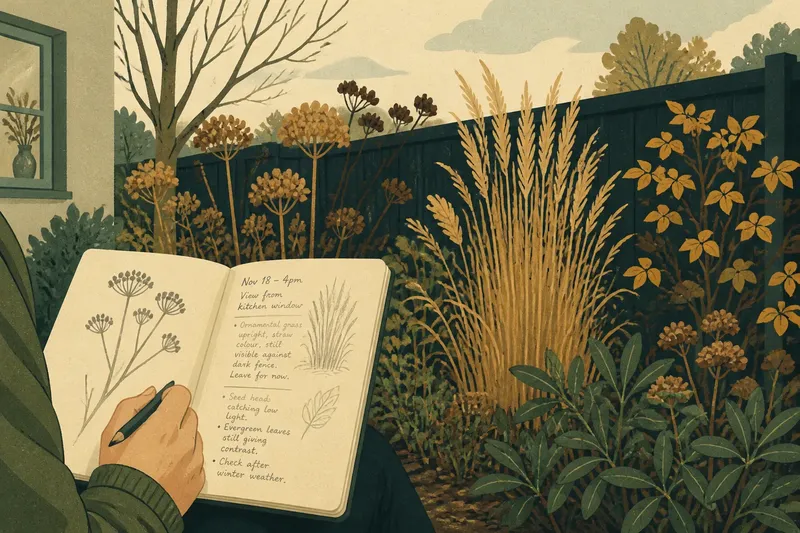
A late-season garden walk can show which plants hold their shape after flowering and which details fade from view. Take a pencil outside while stems and seed heads are still standing; a few precise observations can help you choose what to preserve through winter and what to cut back later.
This is a seasonal record, not a plan for rearranging beds or widening paths. Focus on the changing character of the plants themselves: their outlines, textures, seed heads and relationship to the season. You can make useful notes without drawing the whole garden.
Choose a few plant details to observe
Bring a small notebook and a soft pencil. Pick one border or group of containers, then look closely at what remains visible as flowers fade. Notice the colour and shape of seed heads, whether stems stay upright, and how evergreen leaves contrast with browning foliage.
Write down what you can see rather than judging the planting. “The seed heads catch the low evening light” gives you something specific to remember. “The border looks tired” does not tell you which plant or feature made that impression.
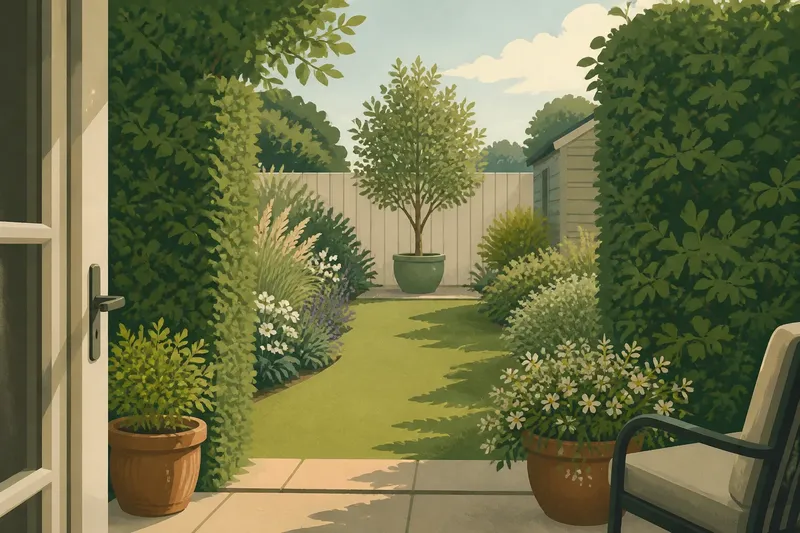
Look at the same plants from more than one position, such as beside the border and from a nearby window. A fine stem may disappear against a dark hedge from one angle, yet stand out against the sky from another. Note the viewpoint alongside the observation.
Make a simple record without mapping the garden
You do not need a full site plan. Use one of three small records, depending on what you want to remember:
- A plant portrait: Draw the outline of a single clump, shrub or pot, then add a short note about its shape or colour.
- A close-up sketch: Record a detail such as a seed head, curling leaf or branching stem that you may want to compare later.
- A brief observation list: Note a plant name, if known, its visible condition and the feature you want to keep or review.
For example, an entry might read, “Japanese anemone: pale seed heads remain visible against the dark fence; check whether they still look attractive after winter weather.” If you do not know a plant’s name, describe it by its location or appearance rather than guessing.
Decide what deserves a winter note
Use a small set of clear prompts so your notes lead to decisions. Check each observation and choose what to do next:
- Observe whether seed heads remain upright; if they provide a visible winter feature, leave them for now, but if they collapse into a wet tangle, note that they may need cutting back when suitable for the plant.
- Check whether stems still show a pleasing outline; if the shape adds interest, keep it under review, but if it looks ragged and blocks a valued view, mark it for a later tidy-up.
- Look for signs of self-seeding; if seedlings appear where they are welcome, note the plant to retain, but if they spread into an unsuitable spot, identify the plant before deciding how to manage it.
- Notice evergreen foliage among fading leaves; if it gives the planting contrast, record the combination, but if brown leaves smother it, check whether gentle clearing would help without disturbing wildlife or the plant.
- Check whether a plant’s colour remains visible against its background; if the contrast works, note the pairing, but if the plant disappears from the view you care about, consider a different seasonal companion rather than moving it on impulse.
- Look for damage or unusual decline; if the cause is unclear, record the plant and seek suitable local gardening advice before cutting or treating it, but if the change is simply seasonal fading, note it without taking action.
Keep the observations selective. Counting every leaf or recording each fading flower adds effort without making the seasonal picture clearer. A handful of details is enough to help you remember what the garden offers as growth changes.
Use the notes to make a seasonal decision
Separate what you want to retain from what needs a closer look. A note about attractive seed heads may support leaving them in place for now. A note about soft, collapsed stems may prompt you to check the plant’s preferred care before tidying. Some plants also provide shelter or food for wildlife, so avoid clearing everything simply because the border looks untidy.
Imagine you have a clump of ornamental grass with upright, straw-coloured stems beside a dark fence. You sketch its outline, note that it remains visible from the kitchen window, and decide to leave it standing for now. Later, if the stems collapse or the plant’s care guidance calls for a different approach, you can make a considered seasonal choice rather than cutting it back automatically.
When identification or timing matters, check the plant label or reliable local gardening guidance. Plants differ in how they respond to pruning and winter conditions, so a general note should not become an instruction to cut or move an unfamiliar plant.
How can you make seasonal notes useful?
Should you record every plant?
No. Focus on plants with distinctive winter shape, colour, seed heads or a change you want to check. A selective record is easier to use than a catalogue of every stem.
Are photographs useful alongside sketches?
Yes, a photograph can preserve details that are fiddly to draw, while a sketch helps you pick out the feature you noticed. Add the date and viewpoint so you can tell what the image shows later.
What should you do if you cannot identify a plant?
Describe its appearance and where it grows, then ask a knowledgeable local gardener or use a dependable plant-identification resource. Avoid pruning or treating it until you know what it is and what care it needs.
When should you act on a seasonal note?
Review the note when you are planning that plant’s care, rather than acting automatically during the walk. Check suitable timing for the plant and local conditions before pruning or removing growth.
Make the next garden walk easier
Date each page and name the plant or container as clearly as you can. If you revisit the same detail, add a fresh note rather than replacing the old one; the difference between two seasonal observations can be more useful than either on its own.
A late-season garden walk with a pencil works best when it leaves you with one or two clear choices about what to keep watching. Make the record while the stems are still visible, and let the garden’s quieter details guide your next seasonal decision.