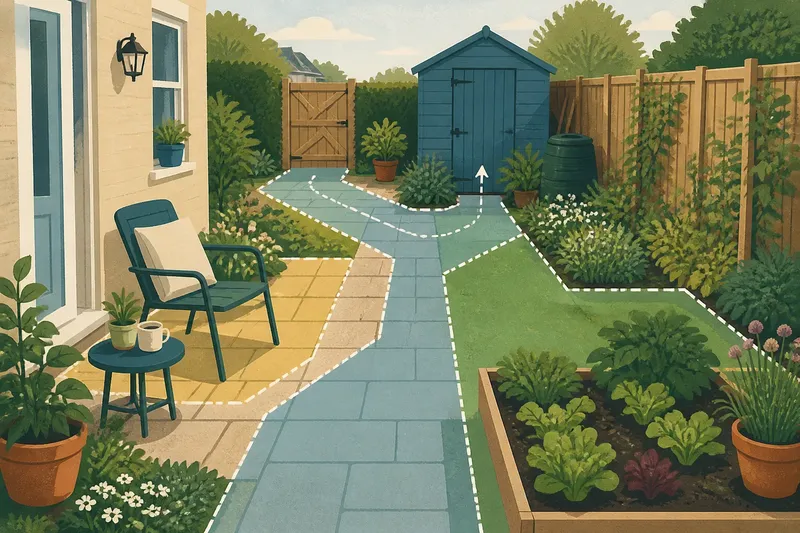
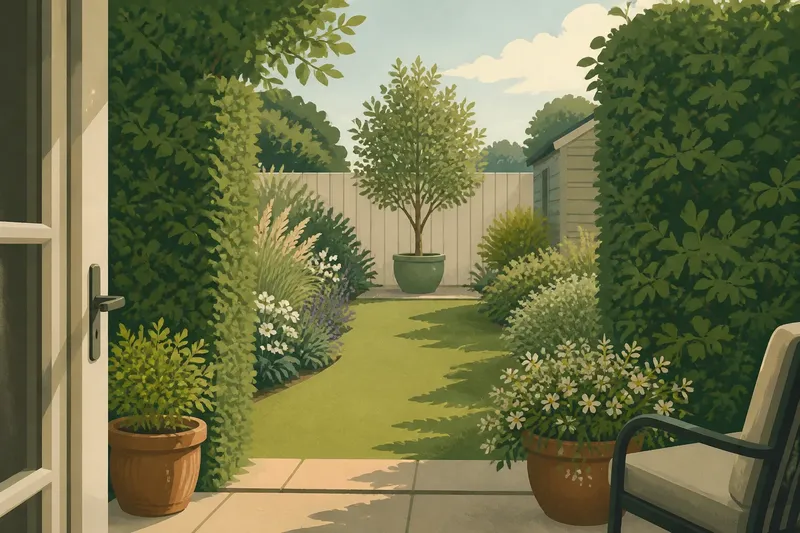
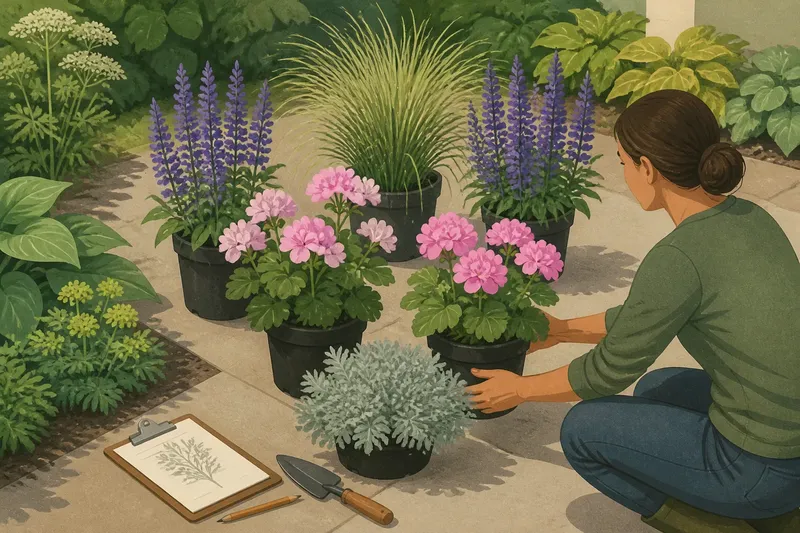
Containers or Open Beds for Grouping Plants
Containers or open beds shape a planting group in different ways. Choose the format that suits your space, desired outline and need to rearrange plants.
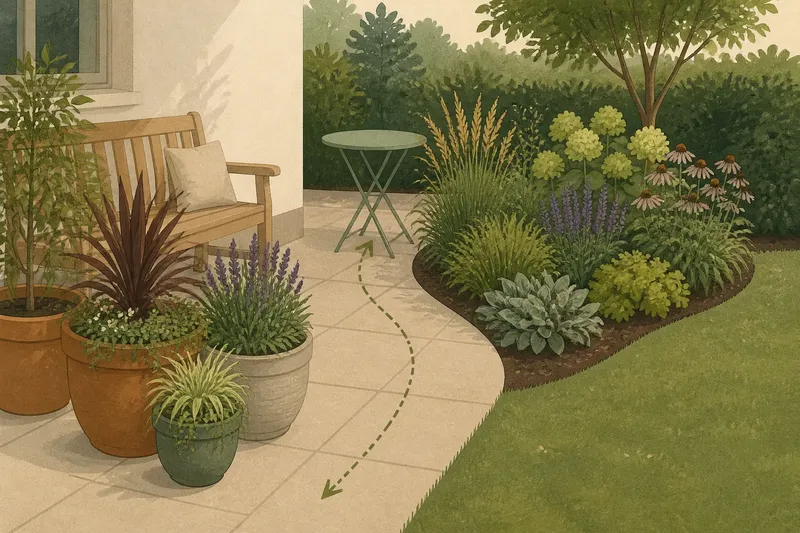
Containers or open beds give plant groups different boundaries, and that changes how they sit beside a path, patio or lawn. Choose containers when you want a distinct, movable arrangement; choose an open bed when plants should share the ground and connect with the garden. The better fit depends on the space and the way you want the planting to read.
Containers and open beds create different planting groups
A container keeps its plants within a visible rim. Even a relaxed mix of foliage reads as a separate unit, whether one pot stands alone or several gather on a patio. The vessel also takes up surface space, so its position matters as much as the plants inside it.
An open bed has no vessel around it. Its boundary comes from a cut in the lawn, a path, paving, or a change in ground cover. Plants can meet that edge or soften it, making the group feel connected to the surrounding soil. In return, the bed depends on a boundary that remains clear.
Neither format has to look formal or informal. A terracotta pot can sit quietly beside paving, while a sharply edged bed can look composed. Focus on whether the plants should feel contained or continuous, and on how the surface around them is used.
Choose containers for a distinct, adjustable arrangement
Containers suit patios, paved entrances and other hard surfaces where planting needs a clear footprint. They can bring foliage close to a seat without converting the surrounding paving into a bed. A group of pots can also be rearranged if access or furniture needs change.
Choose vessels that suit the planting and the space. Check that they are suitable for outdoor use and have drainage, then follow the maker’s guidance. A collection can feel connected through a shared finish, shape or colour; using a different pot for every plant may make a small area look busy.
Containers are useful when a plant grouping needs to remain separate from nearby planting. But they occupy usable ground, and heavy vessels may not be easy to move. Leave clear access to doors, seats and routes before settling on a position.
Choose an open bed for planting that shares the ground
An open bed suits a border or planting pocket that should read as one continuous area. Repeated plant forms can carry the eye along its length, while the shared soil helps the group belong to the surrounding garden.
Keep the outline simple enough to read from the places you use. A clean curve or straight edge is easier to maintain than a string of small bumps. Mark a proposed shape with a garden hose or a line of sand, then look at it from the path and the house before digging.
Once plants are established, an open bed is less readily rearranged than pots. That makes it a better match for a location and outline you are comfortable keeping. A spade-cut edge, paving or suitable low edging can define the bed; choose a boundary that fits the ground and does not get in the way.
Check the planting conditions before choosing
The format is only part of the decision. Check the site and your intended use, then choose the option that fits what you observe.
- Surface: If the area is paving and you want to keep it intact, choose containers; if you can plant into the ground, an open bed is an option.
- Access: If pots would narrow the route to a door or seat, move the grouping or choose a bed where planting will not obstruct the route.
- Watering: If you can reach containers easily, they may suit the site; if they would be awkward to water, consider a bed or a more accessible position.
- Change: If you expect furniture or access needs to shift, choose containers you can comfortably move; if the planting can stay put, an open bed may suit.
- Boundary: If the proposed bed edge is hard to see against the lawn or path, mark it more clearly or choose containers with a distinct rim.
- Planting plan: If plants should read as separate specimens, group them in containers; if they should form a connected sweep, shape an open bed.
Say you have a paved corner beside a bench, and a small table sometimes needs to pass through it. The hypothetical starting point is a clear route, a bare corner and foliage you want near the seat. First, mark the route with string and place three empty pots in the remaining space; next, check whether you can still pass the table without shifting them. If the route stays clear, the pots provide a defined group that can be moved when needed; if they obstruct it, try two pots closer to the wall or leave the corner open. This gives you a visible decision before you commit to planting.
Let the planting shape suit its container or bed
In a container, the vessel is part of the group’s shape. Choose plants whose mature forms suit its available space, and avoid crowding the rim with foliage that spills into a route. In an open bed, think about how the planted edge meets the lawn or path; low or spreading plants can soften that meeting point.
Repeat a feature to connect the grouping. Matching vessels can make a row along a wall feel deliberate, while recurring foliage forms can link sections of a bed. One shared feature is often enough; several competing repetitions can make the planting feel over-arranged.
Consider where you will see the plants. A group beside a seat is viewed close up, while a border may be seen from a path or window. If people approach from several sides, arrange the plants so the group makes sense from each direction rather than relying on one front-facing view.
Which planting format suits your space?
Are containers easier to rearrange than open beds?
Usually, yes: individual pots can be shifted, while an established bed is tied to its location. Heavy containers can be awkward to move, so judge them by the route and lifting you can manage.
Do open beds have to look informal?
No. A clear, straight edge can make a bed feel crisp, while a mixed group of pots can feel relaxed. The outline, spacing and materials all affect the impression.
Can containers and an open bed work together?
Yes, if each has a distinct purpose. A bed can carry the main planting while a pot sits on nearby paving; avoid adding a second group unless it serves the space.
What should I decide before planting?
Decide whether the plants should feel separate or continuous, then check the surface, access and ease of care. If you are unsure about a bed’s outline, mark it temporarily and view it from your usual routes before digging.
Keep the boundary simple and useful
It is rarely worth tracing a bed in tiny curves or surrounding every pot with extra edging. Those details can distract from the plants and make ordinary tidying harder. A straightforward outline is easier to read and maintain.
For either format, check that the edge does not obstruct the way you use the space. With containers, confirm outdoor suitability and drainage; with a bed, make sure the boundary fits the ground. For advice about a particular site or plant, ask a qualified gardening professional where needed.
For containers or open beds, the boundary is the practical difference: pots keep a group distinct, while a bed connects it to the ground around it. Choose the format that suits the surface and the way you use the space. Before planting, walk the route you normally take and check that the grouping leaves it clear.