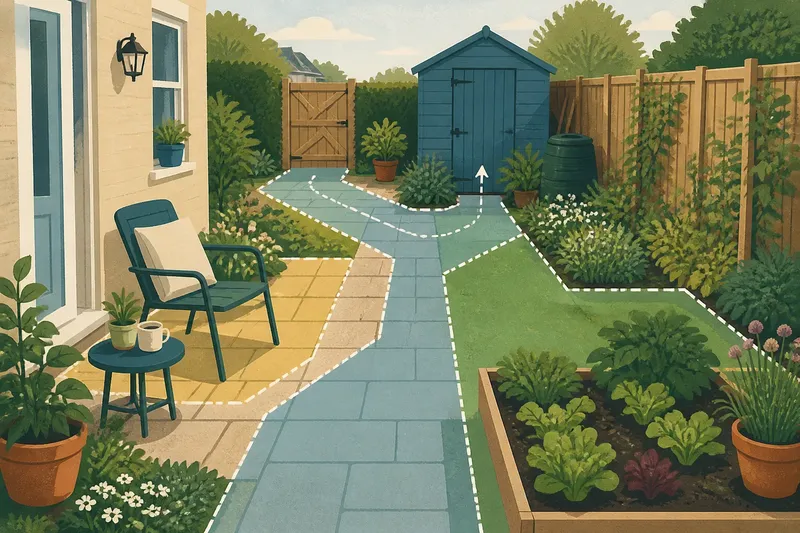
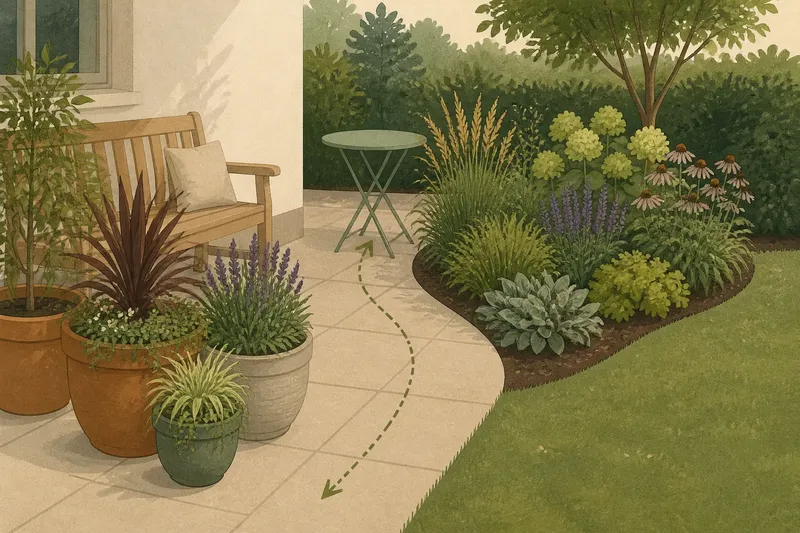
How to Frame a Garden View Without Adding Clutter
Learn how to frame a garden view with existing plants, paths and boundaries, so the eye finds a clear destination without filling a small space with clutter.
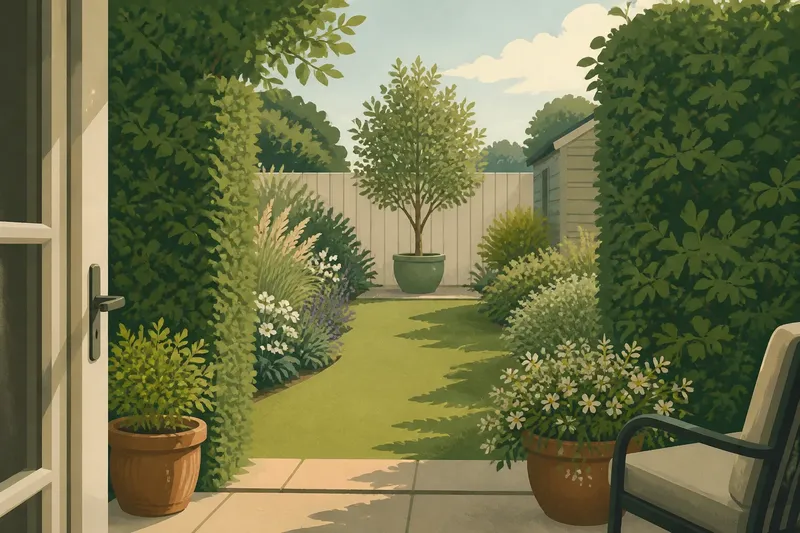
A garden view can feel more inviting when a doorway, a gap in foliage or the turn of a path gives the eye a clear route. To frame a garden view, start with a place you actually look from, then decide what you want to notice beyond it. No arch or ornament is required.
Begin with the view you already have
Stand at the kitchen door, a favourite seat or the garden gate. Notice what draws your attention first. It might be a handsome tree, a bright patch of flowers, a bare fence or a neighbour’s shed. The aim is not to disguise everything; it is to make the view feel intentional.
A frame is simply an edge that separates one part of the scene from another. A doorway, the uprights of a pergola, the sides of a hedge opening or branches arching over a path can all do the job. The opening can be uneven. It only needs to direct attention without blocking the route or making the garden feel cramped.
Think about where people pause as well as where they enter. A view from indoors may line up differently from one seen while seated on the terrace. If the garden has several everyday viewpoints, choose the one that matters most and check that the design still feels comfortable from the others.
Use existing features before adding new ones
Before buying plants or building a structure, look for edges already present. A wall corner can frame a sunlit border. A gap between shrubs may reveal a seat. A path that bends behind a hedge can create a glimpse of what lies ahead.
These options have different effects. A doorway or arch gives a crisp outline. A hedge opening feels softer and can change as plants grow. A wall or mature tree provides a natural edge, though the view may be less symmetrical. Choose the kind of frame that suits the house, paving and garden style rather than adding a feature simply because it is familiar.
Seasonal foliage matters. Deciduous plants can open a view in winter and soften it in summer. Evergreens offer a steadier screen, but may make a narrow passage feel enclosed. Check the plant label and expected mature shape before planting; allow for the access and light you want to keep.
Give the view a destination
A focal point might be a distinctive tree, a textured wall, a bench facing the light or a patch of planting that changes through the year. It does not have to be an object. What matters is that it can be recognised from the chosen viewpoint and feels at home in its surroundings.
Consider its outline against the background. A pale feature may stand out against dark foliage, while a similar colour can disappear against light paving. A small detail may be lost in a long view; a very large feature can overwhelm a compact space. Look from the place where you expect people to pause, rather than judging it close up.
Keep the area around the destination relatively calm. Grasses moving in a breeze or leaves catching light can add interest, but several competing features may scatter attention. A single clear destination often works better than a row of ornaments.
What should you check before changing the view?
Does every garden need a focal point?
No. Texture, light or a gradual reveal can hold attention without one dominant feature. Add a focal point only if it supports the way you use the space.
Can plants frame a view without an arch?
Yes. A pair of shrubs, a hedge opening or branches over a path can form an informal border. Leave enough space for the route and for plants to grow without obscuring the view.
How can a view change with the seasons?
Pair a steady feature, such as a wall or gate, with plants whose leaves, flowers or silhouettes change. Decide whether the shifting frame is welcome; if not, use a more consistent outline and keep seasonal planting away from the main sightline.
What can I use to preview an opening?
Use movable pots or garden canes to mark possible edges, then view them from the doorway, path and seat. If a marker blocks movement or hides the destination from an important viewpoint, shift it before making a permanent change.
Try a temporary layout before committing
Say you have a hypothetical narrow garden with a terrace, a lawn and a plain fence at the far end. From the kitchen door, the fence dominates; from a terrace chair, a neighbouring shed catches the eye. You would like a clearer view without installing a large arch or filling the garden with ornaments.
First, choose the kitchen door as the main viewpoint. Set a movable pot with a suitable plant near the far fence as a possible destination. Place two existing pots near the terrace edge, leaving an open route between them. From the door, check whether the gap leads the eye towards the far pot. Then sit in the chair and check whether the shed still dominates.
Imagine the first arrangement leaves the far pot visible from the door but the shed prominent from the chair. Move one terrace pot sideways, then view both positions again. If the adjusted gap still directs attention to the far pot and leaves a clear route, the arrangement is promising. If the chair view remains awkward, use a suitable airy plant to soften the shed’s edge, or accept that the two viewpoints need different treatments.
The result is a practical choice rather than a borrowed design formula: keep the layout that works from the viewpoints you use, and leave out any frame that makes movement awkward. The pots are temporary markers, not a prescription for planting or buying a particular feature.
Check each design decision before making it permanent
- Observe the view from the doorway; if the boundary dominates, then try a focal point in the existing sightline, or choose a different viewpoint as the main one.
- Observe whether a proposed opening leaves the path clear; if it narrows the route, then move the markers or abandon that opening and use a wider gap.
- Observe the background behind the focal point; if the feature disappears against it, then choose a contrasting outline or shift the destination to a clearer setting.
- Observe the view from a seated position; if a plant or structure blocks it, then lower or reposition the frame, or prioritise another viewpoint.
- Observe how seasonal foliage affects the opening; if growth is likely to obscure the view you want to keep, then choose a steadier frame or leave more space around it.
- Observe whether the frame suits the house and existing materials; if it competes with them, then use a simpler edge already in the garden instead.
- Observe the upkeep a plant frame would need; if repeated trimming would feel like a chore, then use a naturally open plant, a fixed boundary edge or no frame at all.
Keep the frame comfortable and simple
Check the view as you approach, not only from its most flattering position. The focal point might appear gradually, or it may be visible at once. Either can work. Make sure the opening leaves room to walk and that a seated person can still see the destination.
It is not worth clipping plants constantly just to preserve a narrow sightline unless that task genuinely appeals to you. Nor must every untidy corner be screened. A small change to the seating angle, a partial screen or a clearer route for the eye may be enough.
To frame a garden view well, use what is already there, test the view from real pause points and make changes only when they improve the scene or its use. A gap between branches can do more than a new structure if it reveals the part of the garden you most enjoy seeing.